
As children, we all loved to blow bubbles using a plastic hoop and soapy water. There is great enjoyment in watching the bubble grow and grow – the bigger the better.
Sadly, however, there comes a point in the development of all soap bubbles when they eventually pop.
The force of gravity drains the top of the bubble, making the bottom heavier. Meanwhile, the water in the film evaporates until the surface tension can no longer contain it. Eventually these forces cause the soapy structure to collapse.
Aside from the fun of such games, there is another more serious side to the dynamics of bubbles, most notably in economics.
In his book Manias, panics and crashes, bourgeois economist Charles Kindleberger defines a bubble as “an upward price movement over an extended range that then implodes”.
This refers to the price of assets, such as shares or real estate, which, thanks to speculation, exceed their intrinsic value.
Here, the innocent bubble is transformed into an ominous threat of impending doom.
One bubble after another
Today, we are in the midst of a massive bubble. This is terrifying the serious strategists of capital.
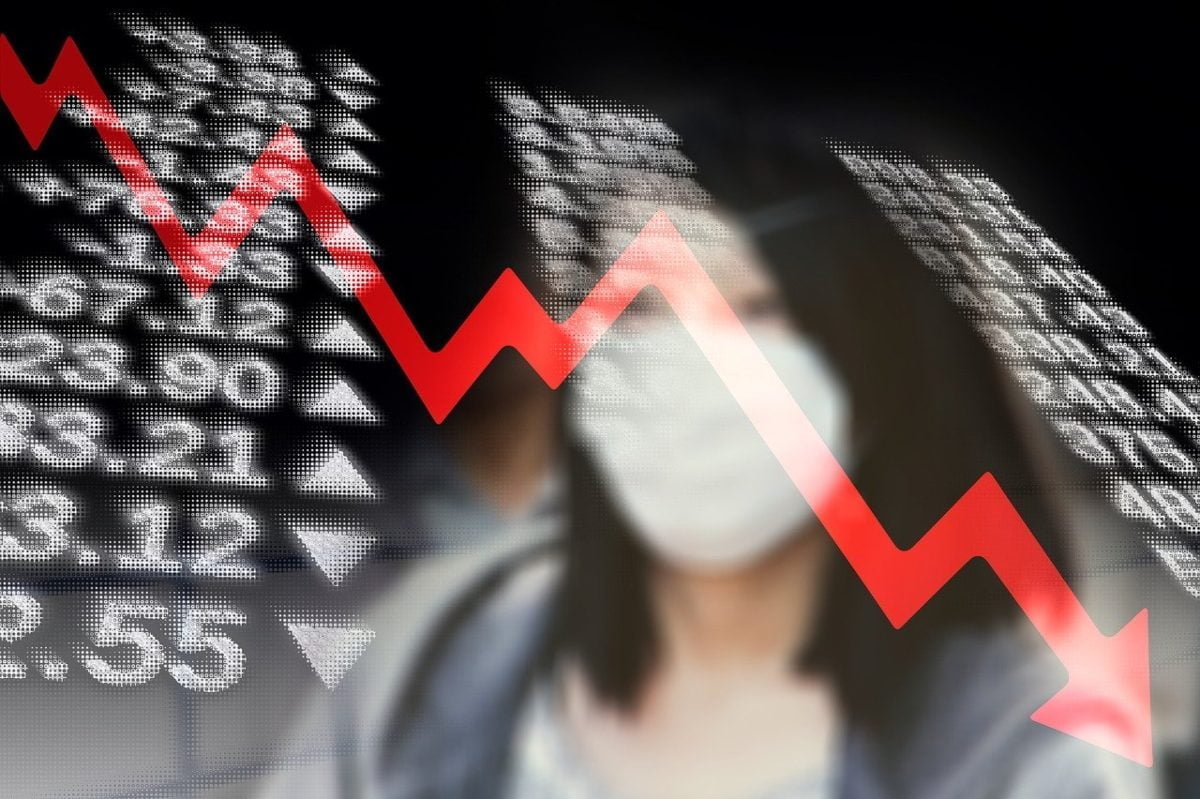
“Be warned. We are reliving the Roaring Twenties,” states the Financial Times. “Not quite a new Jazz Age – jazz is a bit tired these days. But artificial intelligence euphoria is rampant, crypto lunacy is rife, credit is bubbling in private markets and the US is once again at the heart of a global fiscal and financial maelstrom. Close to a hundred years on, we have to ask: does another 1929 crash loom?”
There have been many examples throughout history of bubbles. One of the most famous is the Dutch tulip bubble of the 1630s. The simple, everyday tulip bulb soared in price to astronomic levels, before dramatically collapsing in February 1637. This left behind a trail of bankruptcies.
This was followed by the South Sea bubble in 1720, based on expectations that the British South Sea Company would make fabulous profits from the slave trade. This created a frenzy. But the super-profits never materialised. Instead, the company collapsed and investors were ruined.
There was also the Florida land bubble in the mid-1920s. Speculative demand for real estate resulted in barren areas – largely covered in swamp – being divided into lots and sold to buyers with down-payments of as little as ten percent. Prices rocketed as demand soared. Eventually a peak was reached, collapse ensued, and losses mounted.
This was quickly followed by the boom in the US stock market, which saw American share prices going up and up. Once again, people poured their money into this venture.
As with other major manias, this bubble was inflated by the ability of investors to buy stock on credit, “on the margin”. In effect, this was a big gamble: a hope that enough money could be made to cover any debts incurred, and much more.
Millions of shares were traded everyday. Buyers and sellers were seemingly making a tidy sum.
Stock prices rose as more and more people bought them; and people bought them as prices rose. It was an archetypal speculative bubble; a merry-go-round of money making – until prices crashed down to earth with a bang, as witnessed in the Wall Street Crash of October 1929.
‘Buy, buy!’ became ‘sell, sell!’ The market had surrendered to blind, relentless fear. And fear turned to panic.
Fictitious capital
All of these bubbles were driven by a get-rich-quick mania; a belief that money could be made without expending any effort. But this is a fantasy.
As long as prices keep on rising, miraculously, ever-larger layers of society are drawn in.
Even when people realise the situation is unsustainable, there is no way of gradually deflating the bubble.
Like with the aforementioned analogy of the soap bubble, the physics of a financial bubble make it impossible to release the internal pressure in a controlled manner. Instead, a crash becomes inevitable, and the bubble bursts explosively.
More recently, meanwhile, we had the subprime mortgage bubble in the 2000s, where mortgages were offered to people – primarily in the USA – who could never afford them.
These risky loans, in turn, were divided up, bundled together with other debts to form new financial assets (known as ‘derivatives’), and sold as supposedly sound investments.
Money poured into these derivatives. Speculation became rife. At the time, however, the capitalists denied there was a bubble – until it all went pear shaped with the crash of 2007-08.
Karl Marx described this speculative investment as a form of ‘fictitious capital’.
Real capital, Marx explained, is money invested in industry, infrastructure, machinery, factories, etc. – and, above all, in workers’ labour power – to produce surplus value.
Instead of producing wealth through production, however, the financiers and bankers want to simply produce money through money. “This class of parasites,” Marx outlines, “knows nothing about production and has nothing to do with it.”
“At the same time,” he continues, “banking and credit become the most potent means of driving capitalist production beyond its own limits, and one of the most effective vehicles of crises and swindle.”
AI euphoria
In response to the deep slump of 2008, the state was forced to step in and bail out the capitalist system. “Never again”, asserted politicians and policymakers, as tighter regulations were put in place, especially over the banking system.
As always, however, greed triumphs. Over time, regulations were watered down or lifted; increasingly seen as a hindrance to economic ‘progress’.
Parallel to this, a giant ‘shadow banking’ system developed, providing big investors with another avenue for their gambling.
Today, a new bubble has emerged, centred around artificial intelligence (AI). Euphoria is rife, with hopes that this nascent technology will transform the economy, yielding mega profits for Silicon Valley bosses and Wall Street investors alike.
Is this not a repeat of the dotcom bubble of the 1990s, involving telecoms, media, and internet company stocks? Of course not, say the optimists, pointing to exuberant markets.
“This time is different” goes the mad refrain. Needless to say, these same words are uttered in the face of every speculative bubble. Concerns about the past must not get in the way of merry money making. Let the champagne flow and the party continue.
The wonders of AI – including its posterboy, Nvidia – are flaunted to investors as a ticket to massive profits; as a yellow-brick road leading to the Emerald City.
This promise has attracted swathes of speculators to buy AI stock, pushing the share prices of the Big Tech monopolies higher and higher. A herd instinct is fuelling a growing bubble.
For today’s Wild West investors, it is like betting on the horses – only in this case, apparently every horse wins!
Fear of missing out
Capital is pouring into AI data centres, and into the power plants needed to run them. Annual investment in tech companies has surpassed 6 percent of US GDP – past the record set in 2000.
AI-related spending for the ‘Magnificent Seven’ (Alphabet / Google, Amazon, Apple, Meta / Facebook, Microsoft, Nvidia, and Tesla) has more than doubled since 2023, to $380 billion for 2025, and is on track to exceed $660 billion by 2030.
📈 ‘Magnificent Seven’ Market Capitalization Peaks in Late 2025, Then Plateaus
On October 29, 2025, the ‘Magnificent Seven’ reached a record $22.3 trillion in combined market value. Since November, momentum has cooled, with market capitalization hovering around a $21.4 trillion… pic.twitter.com/x6nWYsE4Rc
— Econovis (@econovisuals) February 10, 2026
Initially, these tech behemoths used their own enormous cash piles to fund their AI investments. Now, however, they are borrowing vast sums to finance this expenditure. Amazon, Meta, and Microsoft are now suddenly net debtors.
But there is no clarity of where these hyped-up future profits are going to come from; nor who will get them if they do arise. The potential returns from AI are far from clear.
Nevertheless, billions of dollars are being poured into this AI arms race, due to FOMO: the fear of missing out; of being left behind in the gold rush.
Mountains of debt are being racked up in this pursuit, in the forlorn hope that future profits will eventually cover the upfront outlay.
This is similar to the 19th-century railway boom, which also saw massive, wasteful outlays in infrastructure – and, ultimately, a large amount of bankruptcies.
Today, many of the big players in AI – like OpenAI, Anthropic, and xAI – are lossmakers. But they are all caught up in the frenzy.
Some of these AI companies are even actively trying to inflate the bubble themselves: doing deals with one another in order to drive up their own valuations. This echoes the dodgy links between the banks and insurance companies prior to the 2008 slump.
Occasionally, news of poor revenue and returns in the tech sector leads to a scare on the stock market, with investors getting spooked and dumping AI-related shares.
Earlier this month, for example, Big Tech stocks lost over $1 trillion in ‘value’ in response to Amazon’s latest earnings report and spending plans, which sparked concerns about the profitability – or lack thereof – of AI infrastructure investment.
Soon enough, the wobble subsides and the casino continues. But eventually this house of cards will come tumbling down, with dramatic consequences for the world economy.
Ready to explode
“Given the vast potential of AI but also the large number of enormous unknowns, virtually no one can say for sure whether investors are behaving irrationally,” warns Howard Marks in the Financial Times.
“I’d therefore advise no one to go all in without acknowledging that they face the risk of ruin if things go badly. But by the same token, no one should stay all out and risk missing out on one of the great technological steps forward. A moderate position, applied with selectivity and prudence, seems like the best approach.” (9/12/25)
This reveals the dilemma of the speculative investor and capitalist, whose sole aim is to get as rich as possible, in a winner-takes-all scenario. For them, ‘moderation’ is for the weak. Wise words of warning go unheeded in this scramble for the pot of gold at the end of the rainbow.
We are certainly in the throes of an unstable speculative frenzy, with mania around AI showing all the classic hallmarks of a bubble. “All this makes a plausible case for a 1929-type scenario,” concludes the Financial Times.
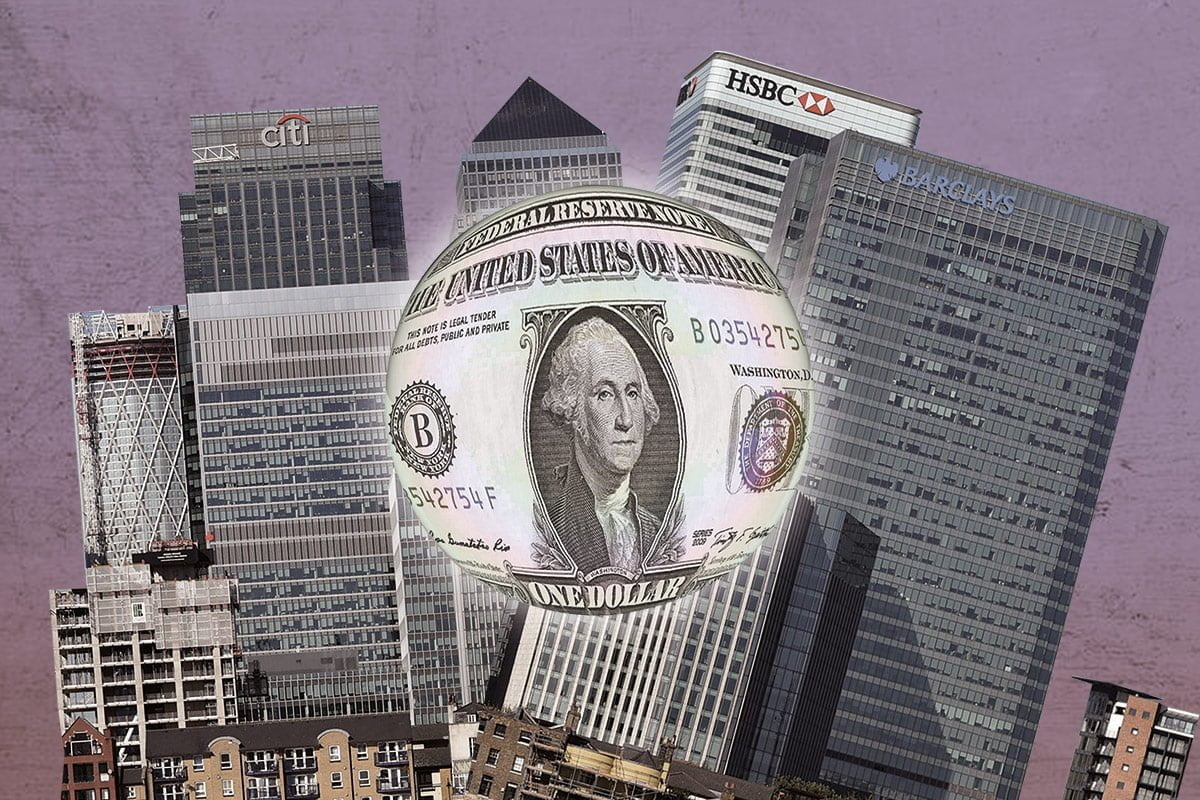
Nobody can predict with certainty when this bubble will collapse. There are many potential flashpoints. But collapse it will.
This new AI bubble is no jolly soap bubble. Its demise is likely to precipitate another global economic slump, but on a greater scale than ever before.
The consequences, in the words of the Financial Times, will be all the greater in this “more fragmented, lower-growth, tariff-torn global economy”.
The risks are mounting, as instability is layered atop instability.
The shaky state of the banking sector, with post-2008 regulations being removed; the ballooning of unregulated shadow banking; the opaque world of cryptocurrencies, the height of speculation: all of this, together, represent a financial nuclear bomb, ready to explode.
The ruling class hopes that such a crash will not be followed by a new Great Depression. But this cannot be ruled out, given the scale of the speculative bubble and of global debt.
We should remind ourselves that the implosion of the subprime mortgage bubble triggered the worldwide slump of 2008-09, which posed a direct threat to the capitalist system.
In 2008, capitalist governments rushed to bail out the system, spending trillions of dollars. Today, however, the representatives of capital are constrained by the enormous public debts hanging round their necks. The next rescue will therefore be even more painful than the last.
World turned upside down
We are living through an epoch of crises, wars, and revolutions.
The world has been turned upside down by the 2008 slump and its aftermath, with nearly two decades of austerity and instability. People’s faith in capitalism has been severely undermined. Consciousness is being transformed.
A new slump will only intensify this anti-capitalist mood, further fuelling the rise of ‘populism’. Disillusionment is turning into anger against the capitalist system, which is in a complete impasse. This will only grow.
Shock and awe are very much on the agenda. As a result, revolutionary convulsions are being prepared everywhere.
So buckle up! We’re in for one hell of a ride.