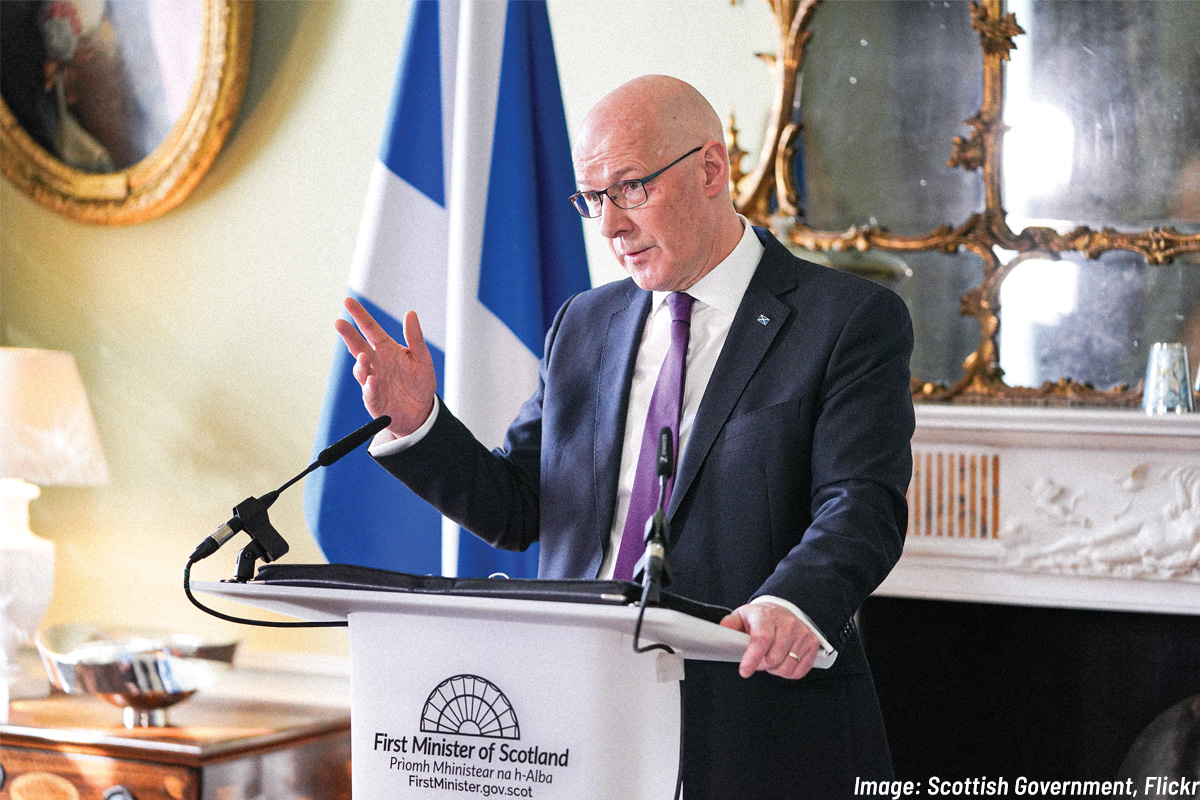

On the streets of Scotland, you would be forgiven for not realising there is an election going on at all. The usual party stalls and leafleters are missing, and parties are reporting difficulties getting volunteers to go out campaigning. Instead, there is a general mood of despondency.
Despite their lead in the polls, there is a notable lack of enthusiasm for the SNP. One recent survey showed that only five percent of Scots think the party has done a very good job in government since 2007.
Nevertheless, given the lack of any other pro-independence alternative, many workers will still hold their nose and vote for the SNP this May, or simply not bother voting at all.
Reform in Scotland
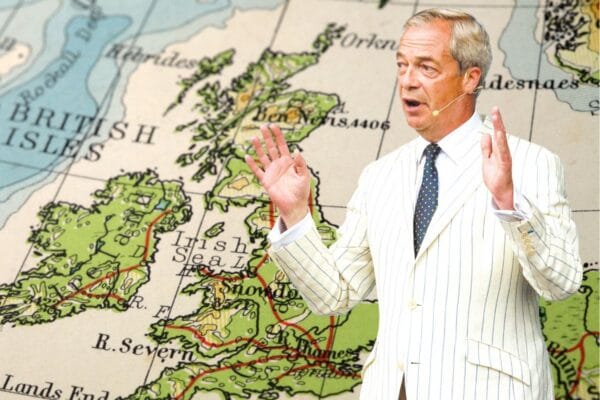
Reform and its predecessors have historically had no support in Scotland, with Reform gaining just 0.2 percent in the 2021 Holyrood election.
In the rest of the UK, Reform’s support is based on posing as an anti-establishment option, following years of attacks and austerity by both Tory and Labour governments, and given the lack of a working-class alternative on the left.
In Scotland, by contrast, such a vacuum has not existed for some time. Instead, the independence movement has acted as a lightning rod for class anger, and posed as a way to break with the rotten Westminster establishment.
Now, however, Reform is sitting at 15 percent in Holyrood polls. This reflects the fact that the SNP has led the independence movement into a dead-end. Their only strategy for achieving independence is ‘asking Westminster nicely’ for a referendum that neither Labour, the Tories, or Reform will ever allow them to have.
Reform’s rise in Scotland is not on the same level as in England and Wales. In Scotland’s proportional system, Farage’s party might get a few regional seats. But it is unlikely they will gain any Members of Scottish Parliament (MSPs) under the first past-the-post part of the vote.
The party’s campaign has already been full of mishaps. Some official candidates were completely unaware they were even standing for Reform, and five candidates have stepped down or been expelled already.
The underlying reason for Reform’s lack of widespread support in Scotland is the national question. There are limits to the ability of any pro-union party to pose as an anti-establishment force in Scotland.
Farage and co. have attempted to distance themselves from support for the union, and have instead appealed to class anger. Nevertheless, they have only really managed to gain support amongst already pro-union layers.
A recent poll, for example, showed that the most important factor for Reform supporters when deciding how to vote is ‘keeping Scotland part of the UK’.
Scottish Greens

The Scottish Green Party has been separate from the English and Welsh Greens since 1990. And remaining ties were further frayed in 2022.
In recent months, however, new Scottish Green leaders Ross Greer and Gillian MacKay have pulled the party closer to its south-of-the-border counterpart, in an attempt to ride the coattails of Polanski’s success.
The Scottish Greens’ ability to position themselves as anti-establishment is limited, however, as they have already been in power with the SNP, under the Bute House Agreement, between 2021 and 2024.
Rather than pushing the Scottish government to the left, the Greens only tarnished their image as a left-wing alternative to the SNP. During this period, the SNP – with the Greens’ assistance – oversaw soaring NHS wait times, a widening attainment gap, and chronic under-funding of local councils.
It is not surprising, then, that the Scottish Greens’ success at the upcoming elections is likely to be limited. The party is set to win extra MSPs: at the time of writing, they are predicted to get 18 seats (all through the proportional vote). But this is only a handful more than Scottish Labour.
Furthermore, the SNP could look to the Greens to form a pro-independence majority. Whilst they may be wary of getting back into bed with the SNP, the Scottish Greens will find it equally difficult to provide much of an opposition.
Rather than representing any faith in the party’s ‘left’ credentials, the Greens’ improved polling reveals both a rejection of the SNP and a lack of any real alternative.
This can be seen in the exodus of prominent lefts from the Scottish Greens last year. Compared with Polanski’s party in England and Wales, meanwhile, there is a notable lack of grassroots enthusiasm behind the Greens in Scotland.
Explosive events

There is no crystal ball to tell us exactly how the May elections will go. What we can say is that the next Holyrood Parliament will reflect a more unstable political situation than Scotland has seen for over a decade.
If the Greens swerve a coalition – which seems increasingly unlikely, judging by the cosy pictures from recent independence rallies – they could undermine the SNP from the left.
Reform will certainly be a thorn in the side of John Swinney’s government from the right. Their presence in Holyrood may also embolden existing fringe unionist thugs, who have already been travelling around to areas like Calder and Falkirk to whip up anti-migrant violence.
Years of SNP one-party rule is beginning to turn into its opposite: a fragmented and polarised political landscape – in Scotland as in the rest of Britain.
Due to the limitations of all the parties on offer, including the Greens and Reform, many will show their disgust towards the establishment by simply not going to the polls on 7 May. ‘None of the above’, for many, is the preferred protest candidate.
Beneath the surface of this apparent apathy is a burning class anger that could erupt out into the open at any point. It is not a matter of ‘if’, but ‘when’ this mood will find an expression.
The communists of the RCP – in Scotland and across Britain – are preparing for these explosive events to come.