
I work in a fittings factory, and the never-ending crisis of British industry bleeds into every aspect of the job.
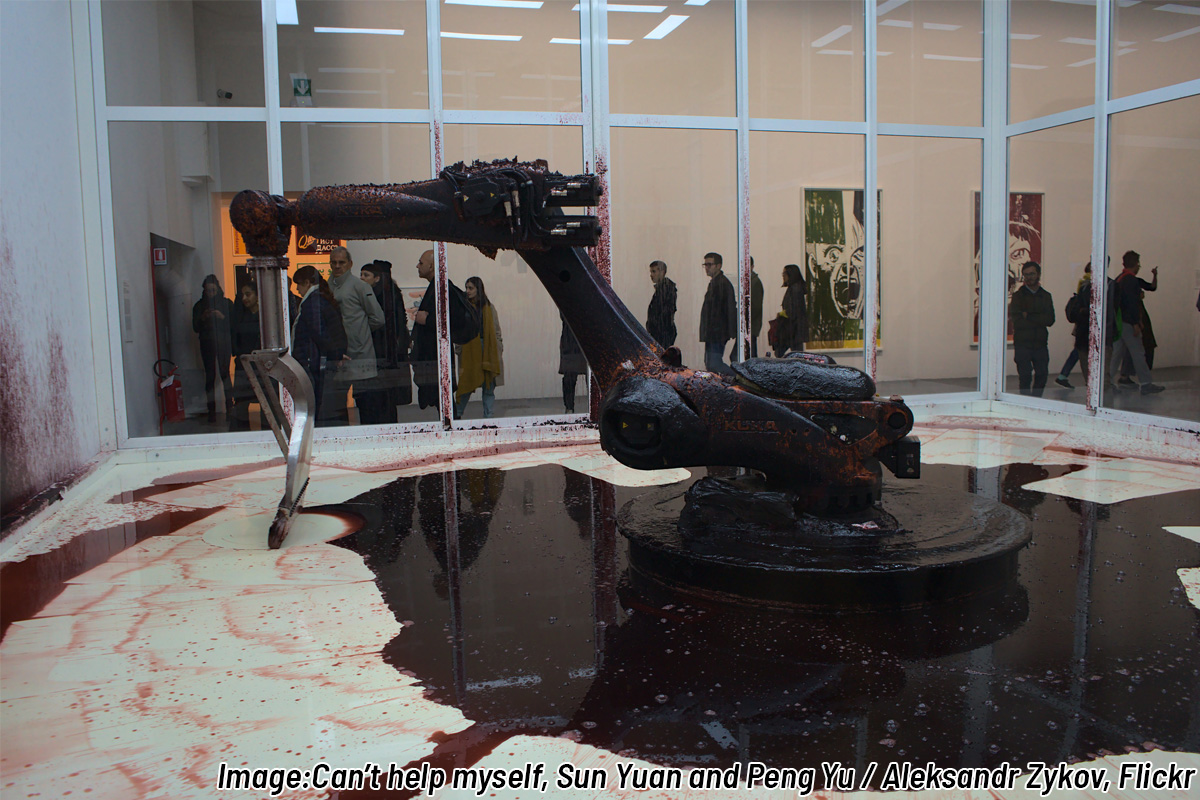
Automation is rolled out at a snail’s pace. For the better part of a year, one of the robots has laid idle in the middle of the shop floor – lacking just a single part to make it operational.
The machines on the assembly line are upwards of thirty years old, and many are over forty. This means constant breakdowns, and the inefficiency of production is pushed onto us in assembly with more intense, less safe work.
Safety especially suffers, as the production doesn’t stop for breakdowns. Excess work is piled up, and you are expected to catch up once the machine is fixed: meaning confusion and rushed work.
Many of my coworkers have permanent wrist and back injuries caused by the machines.
To give one example, recently a machine was put into a faulty configuration by an engineer. It was operated 500 times by a worker before the fault was noticed. Any one of those times could have caused my coworker to be shot by a three inch piece of metal, perhaps fatally.
Whenever the line switches to a new product, the engineers have to tinker with this machine for twenty minutes to change its setting. They often do this multiple times a day. This means that mistakes are more likely; and less likely to be spotted.
That same machine is prone to extended breakdowns. Once, I was told that senior management wouldn’t approve a replacement for £50,000. Yet every year the company I work for pays out £18,000 per employee to its shareholders. The factory I work at was acquired 25 years ago, over a decade after the assembly machines were installed. If that machine breaks, whole product lines can no longer be made at my site… and yet it is not worth £50,000 of investment.
There’s no incentive for ‘our’ capitalists to invest in developing British industry. Faulty machines are a threat to quality, efficiency, and the safety of the workers; but there is no reason to spare even £50,000 to replace a critical machine.
It is clear that they plan to bleed this factory dry and then discard it, alongside all of the workers, many of whom have spent decades at this site.
The vast majority of my coworkers are paid minimum wage, and even better-paid employees earn below-average wages. Many of my coworkers work two or three jobs, many work every day of the week, many have small children. If we leave control of the factory to its current parasitic owners, there will be no future for them, and many can feel it already.