
Last Saturday, up to half a million people marched on the streets of London at the inaugural national demonstration of the ‘Together Alliance’. Some have called it the biggest anti-racist protest in British history.
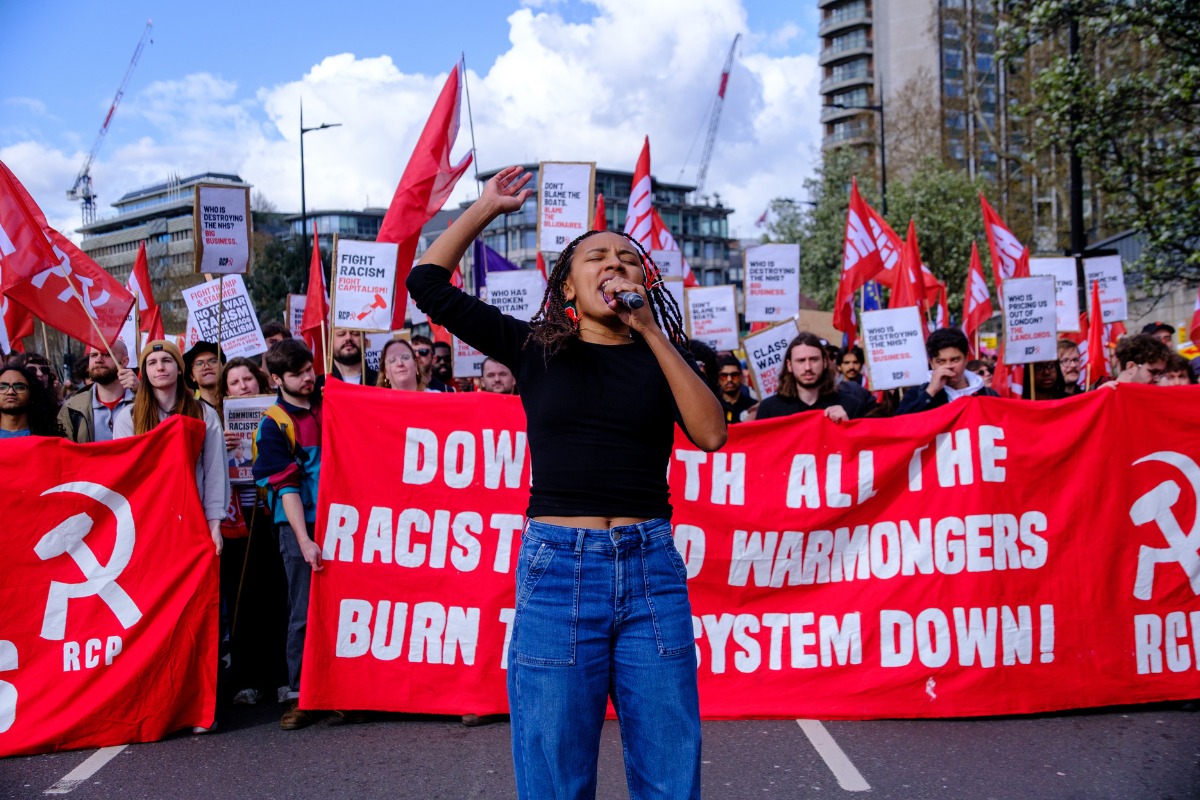
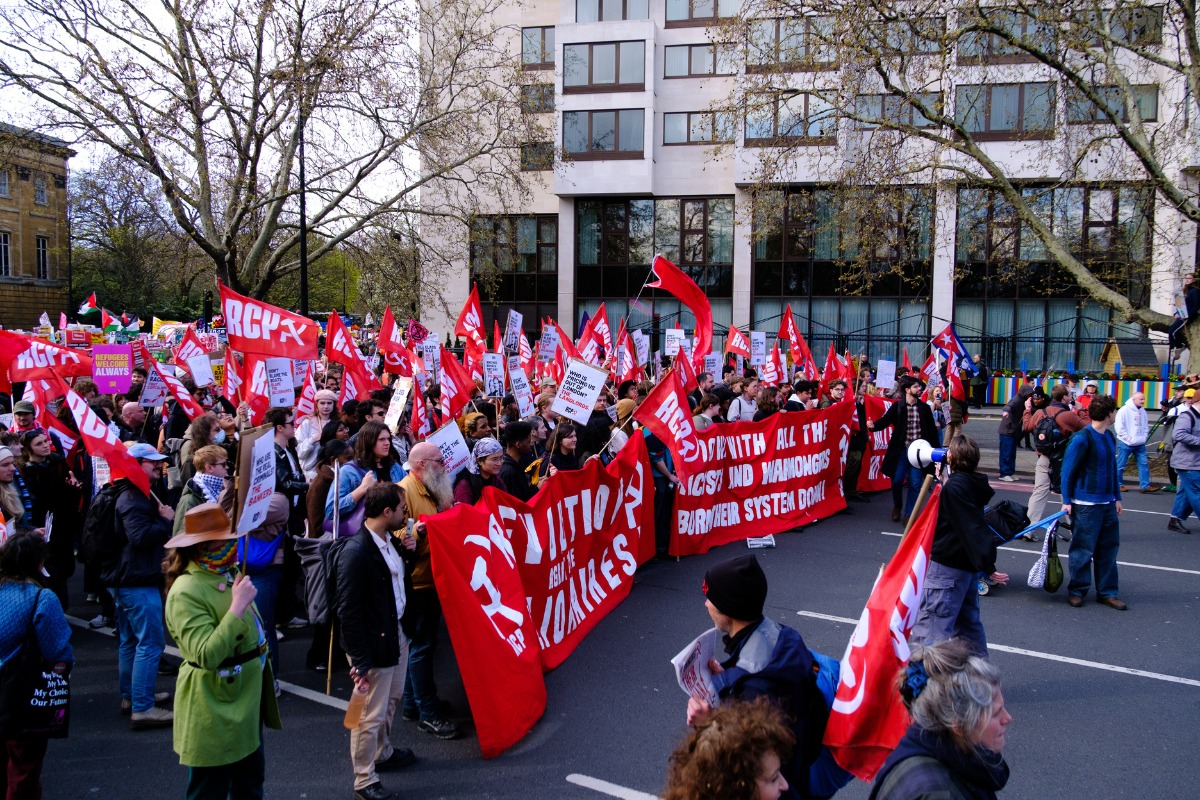
The Revolutionary Communist Party organised a 300-strong Communist bloc, under the banner: “Down with the racists and the warmongers! Burn their system down!” See the report of our mobilisation below.
This demonstration was – undeniably – a show of strength for the left, and a victory for the struggles against racism, the right wing, and the establishment.
Half a million strong. Together.
The biggest march against the far-right in British history. pic.twitter.com/ROJdMWJ4Ka
— Together Alliance (@UKTogetherAll) March 28, 2026
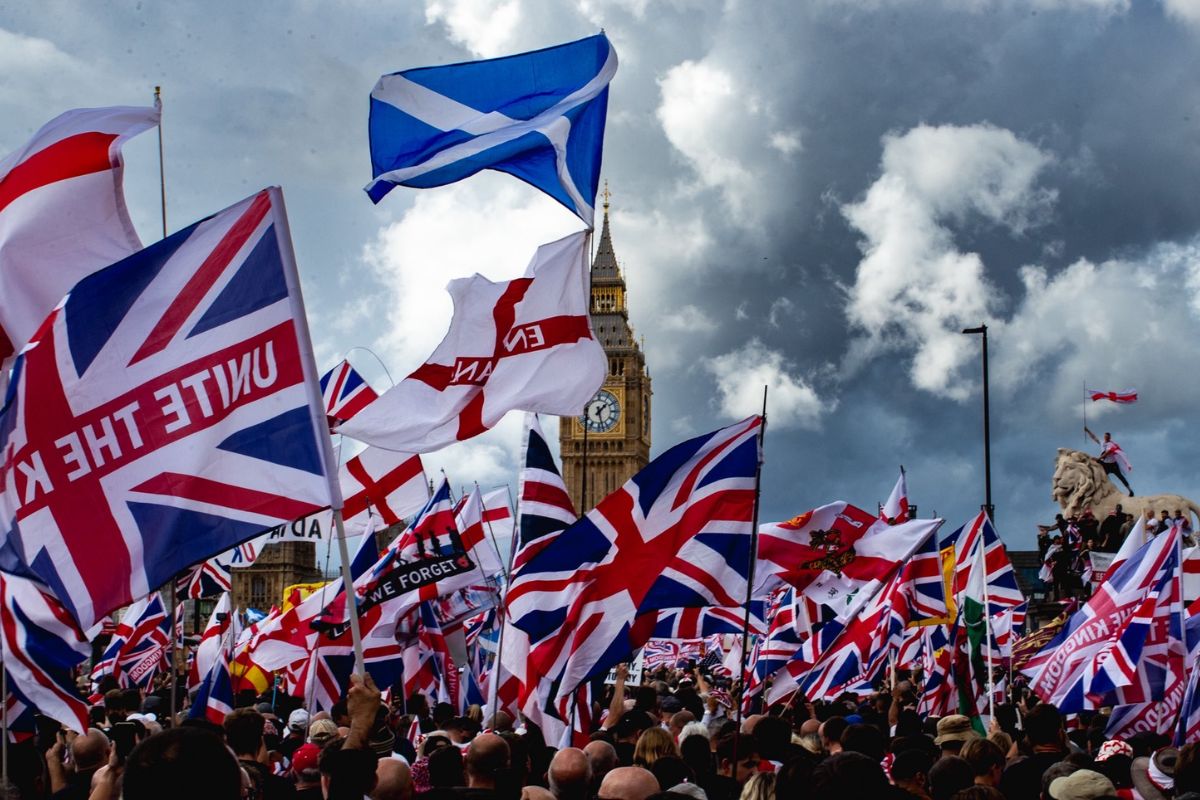
The 28 March demo outnumbered the size of the right-wing ‘Unite The Kingdom’ (UTK) demonstration last September, which was led by reactionary demagogue Tommy Robinson.
As we commented at the time, the UTK demonstration – which outsized the left-wing counter-demonstration by at least ten-to-one – was not a true reflection of the balance of forces in society.
We also remarked in our analysis that, if the leaders of the labour movement “lifted their little fingers, they could have matched the size of Tommy’s crowd”.
That is exactly what we saw last Saturday: even the most rudimentary efforts by the left leaders to mobilise workers and youth were able to produce impressive results.
28 March was a glimpse of the real balance of class forces in Britain. In reality, the number of people prepared to mobilise against the establishment and the right wing is many times greater than those backing racism and reaction.
Last Saturday’s show of strength should therefore be seen as a welcome development; an important step forward.
Following Robinson’s big turnout last September, sections of the left slumped into a fit of hysteria and pessimism. ‘Fascism is on the rise’, we were told. ‘Britain is shifting unstoppably to the right.’
Such fatalistic defeatism objectively holds back the struggle – sowing confusion and demoralisation, and demobilising radical workers and youth.
Anything that drives back and dissipates this doom-and-gloom attitude, by contrast, serves to galvanise the struggle and strengthen the movement, by giving confidence to those wanting to fight back.
Of course, last Saturday’s demonstration was politically heterogenous – with everyone from liberal Europhiles and middle-class environmentalists, to bourgeois charities and religious groups being represented. But that is besides the point. All mass movements are heterogeneous and contradictory.
The main takeaway from 28 March is that hundreds of thousands of workers and youth are being drawn into action – a good many of them for the first time – against the right, against racism, and against the entire capitalist establishment.
As communists, we welcome this development wholeheartedly. It is a harbinger of explosive struggles and massive transformations in consciousness to come.
View this post on Instagram
Why was it a success?
On the surface of things, the success of 28 March might come as a surprise. After all, the political basis of the demonstration – vague, liberal moralism extolling the virtues of ‘love’ over ‘hate’ – was no different to last September, when the counter-protest to Robinson and his supporters was overwhelmed.
In fact, on the back of that defeat, the leaders of the anti-racist movement sunk even deeper into the morass of reformism and class collaboration. The ‘Together Alliance’ has amplified some of the most opportunist trends present on the left.
Indeed, following Saturday’s massive turnout, some of these ‘lefts’ will no doubt draw the – incorrect, superficial – conclusion that popular frontism and apolitical ‘broad church’ politics actually works.
Equally, the scale of this mobilisation cannot solely be attributed to it being well-organised and built-for. The backing of the well-resourced trade unions, for example, certainly played a role. But no more than a quarter of the march was made up of trade union blocs.
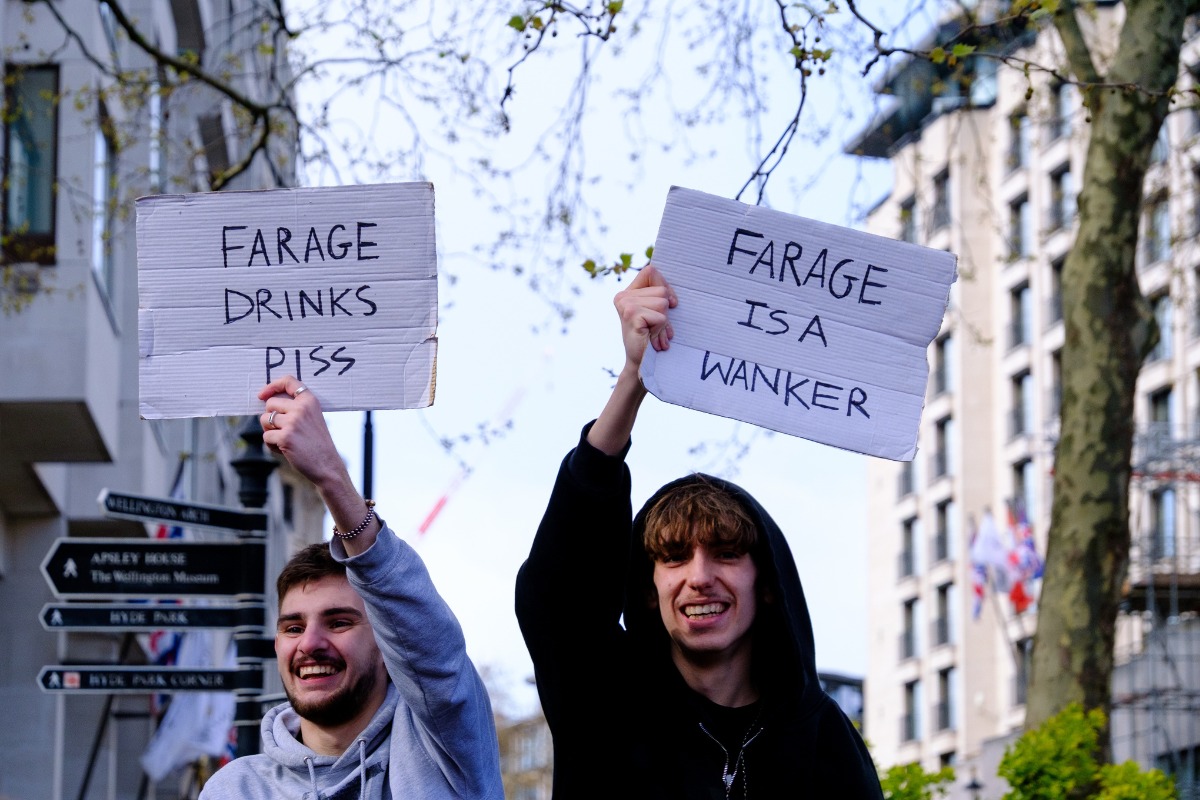
In fact, the majority of those on the march were unorganised youth and workers – those who didn’t belong to any particular union, party, or campaign. Many of those who we spoke to said they simply showed up because they want to fight Nigel Farage and Tommy Robinson.
To really understand the reasons for this massive mobilisation, we have to take a broader look at the events of the past six months.
The UTK demonstration itself was a wake-up call for the left. Scenes of tens of thousands of flag-waving Tommy Robinson supporters streaming down Whitehall – with the full-throated backing of the world’s richest man, Elon Musk – rightly caused shock, fear, and consternation.
Alongside that, there is a widespread and growing rejection amongst young people of the reactionary culture-war politics put forward by Nigel Farage and Reform UK – parroted and encouraged, in turn, by Keir Starmer and his ministers.
This is all tied up with the general feeling that racism, reaction, and division are on the rise. Far-right provocations, mosque attacks, Home Office deportations, and the establishment’s culture-war attacks are all painting a picture of triumphant reaction.
But, as is often the case, the whip of reaction is spurring on and augmenting the most radical layers in society. The apparent ‘shift to the right’ is just one side of the process of the polarisation taking place, as the political status quo fractures and unravels. The left is also growing in strength and confidence.
2026 opened with the mass mobilisations against Trump’s ICE goons in Minneapolis, demonstrating to the world the power that ordinary people can have when they are mobilised and organised as a class.
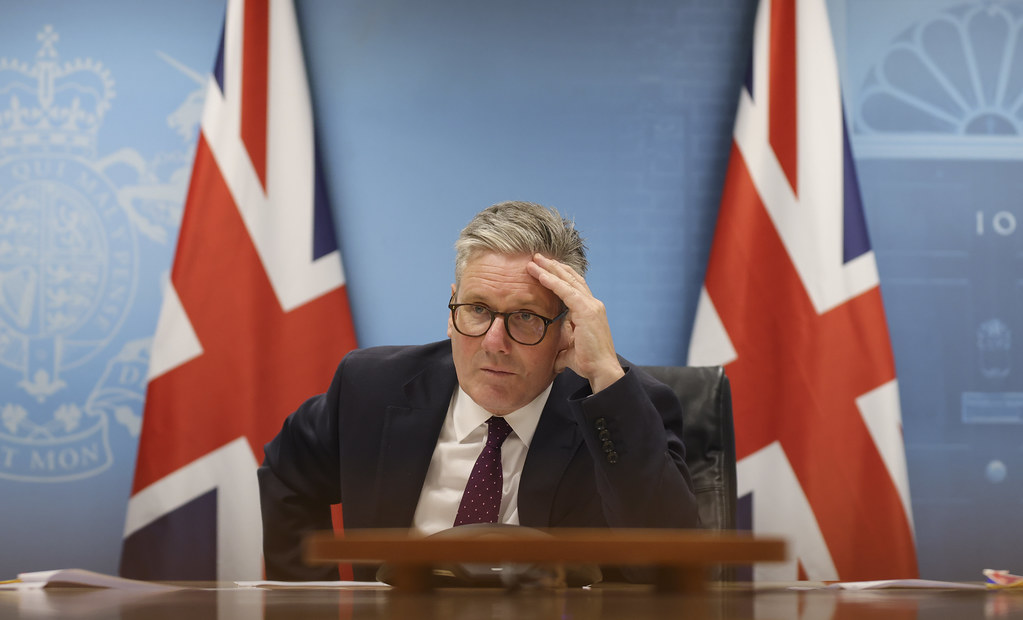
The Green Party under Zack Polanski, meanwhile, has stormed onto the scene in Britain, shattering the old two-party setup in Westminster.
On the basis of a left-reformist programme, and by channelling the widespread class anger against the system, the Greens have quadrupled their membership, and are now polling in second place at 20 percent.
The Greens’ massive victory over both Labour and Reform in the Gorton & Denton by-election has galvanised the left – revealing the mass desire for a left alternative to Starmer and Farage, and showing what is possible.
Alongside the left’s growing confidence, the ruling class appears in complete disarray: the global Epstein scandal; Trump’s reckless war on Iran and its disastrous consequences; Starmer’s U-turn on the Palestine Action ban; Labour’s mutinous infighting; Reform stagnating in the polls; the list goes on.
These calamitous, world-historic events are shaking consciousness, and exposing the weakness of the capitalist establishment. And, as in war, weakness invites aggression. The cobwebs of doubt and dejection – of petty bourgeois cynicism and scepticism – are being burned away. Workers and youth are beginning to move onto the offensive.
As one woman told us at the start of the demo: “The people in power are panicking and losing control. Iran is standing up to America, and Starmer is terrified of the Greens. Now is our time to fight back.”
When you take all of these factors into account – the resentment towards the right; the left’s recent victories; and the establishment’s setbacks – last Saturday’s massive turnout makes sense.
Ever since the defeat of the Corbyn movement, there has been an enormous political vacuum on the left. And this had to be filled, eventually. One way or another, the burning desire for action – and for an alternative to the establishment – had to find an outlet.
What is the political basis of the Together Alliance?
If there’s one thing that certainly wasn’t a factor in the success of last Saturday, it was the political platform of the Together Alliance – or, more correctly, the lack thereof.
“Hatred and fear grow when good people do nothing,” reads the campaign’s mission statement. “We commit ourselves to the hard work of nurturing our democracy, building relationships across divides and working together to tackle the problems we face as a country.”
This accurately sums up the politics of the Together Alliance, whose ‘programme’ consists of fighting ‘hatred’ and ‘division’ with ‘love’, ‘togetherness’, ‘unity’, ‘joy’, ‘friendship’, ‘diversity’, and other such banalities and platitudes. The speeches before and after the march were equally ambiguous, and mostly devoid of political content.
View this post on Instagram
It’s no exaggeration to say that no clear demands or strategies were put forward last Saturday. One of the most ‘concrete’ proposals came from soft-left Labour MP Richard Burgon, who called for “pressure on Labour to get them out of the moral sewer”. To that, all we can say is: good luck!
In practice, the aim of the Together Alliance – a collection of trade unions, left-wing groups, charities, and so on – is to build a loose coalition of anyone and everyone who is opposed to Reform, regardless of their class outlook, party, or political allegiance.
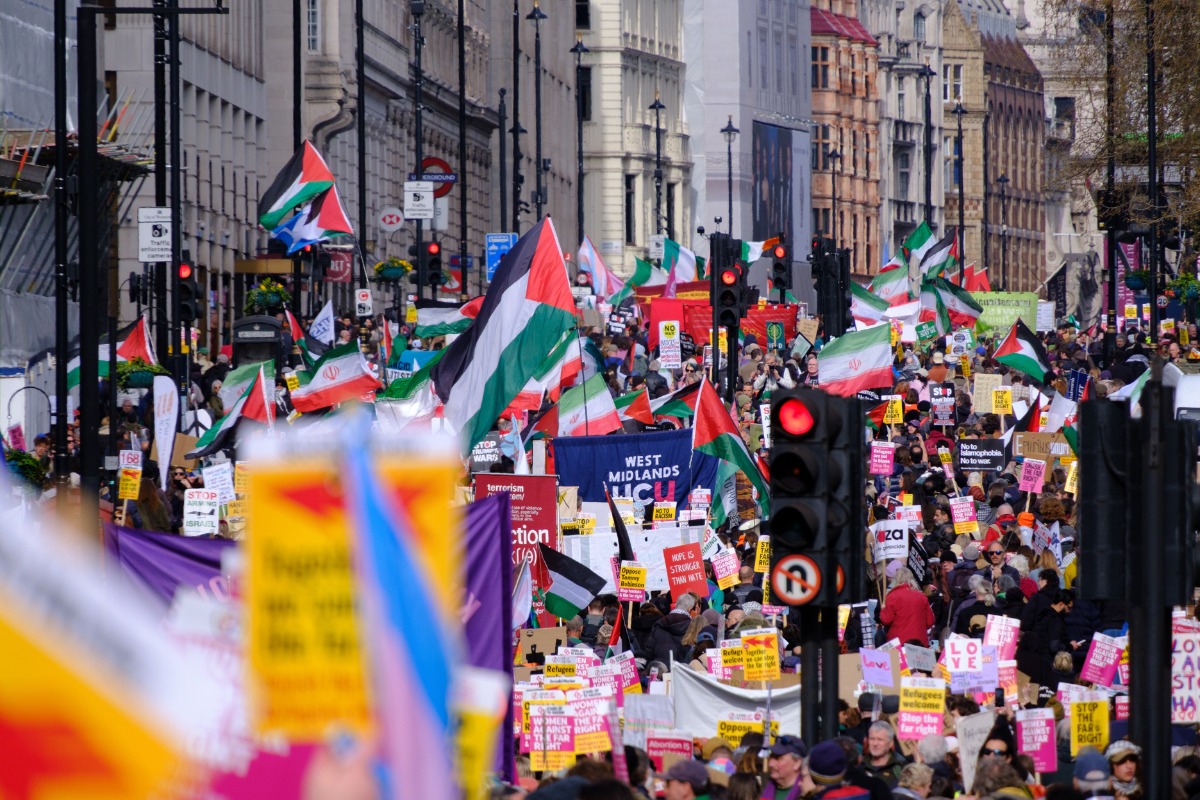
The roster of speakers on Saturday, for example, included politicians from the Liberal Democrats, the Scottish National Party, and the Labour Party – establishment parties that have all had a hand in implementing the austerity that is fuelling racism and right-populism.
Notably, Labour speakers were introduced as simply ‘Members of Parliament’ – a sign that the organisers are aware of the deep unpopularity of Starmer’s party, but would prefer to overlook this in their pursuit of ‘unity’.
Similarly, Labour MP Bell Ribeiro-Addy attacked the “culture in Westminster” of sowing division and demonising immigrants. She neglected to mention that the ruling party in Westminster – the one carrying out record deportations, whipping up xenophobia, and fuelling the rise of Reform by carrying out austerity – is her own party.
In fact, you could count on one hand the amount of times that the official speakers mentioned ‘Starmer’ and ‘Labour’ by name. For most of the time, Britain’s migrant-bashing, anti-worker government was the elephant in the room.
When we asked a Together Alliance organiser why the speakers weren’t criticising Labour, they replied: “Well, there are lots of different issues… we need to appeal to different people, some of whom don’t dislike Starmer.”
This Labour-apologist attitude didn’t escape the attention of the attendees we spoke with. One protestor who had recently founded a grassroots anti-racist campaign in South London joked: “Yeah, this demo is quite wishy-washy. Not quite ‘death to the IDF’, is it?”
“I feel the protest leadership are liberals,” they continued, “and they would rather fight a culture war than the class war.”
Despite the liberal politics of the Together Alliance, there were glimpses of class anger amongst the attendees.
The hundreds-strong Communist bloc, which drew in a lot of unorganised radical youth throughout the march, is one clear example of the desire for class-war politics.
There was also an array of hand-made placards with slogans like “the enemy arrives by limousine, not by boat”, and “blame the billionaires, not the migrants” – slogans that surpassed the woolly, apolitical rhetoric of the main organisers.
Two placards that go together: pic.twitter.com/jEPP8eJsWu
— Jorge Martin ☭ (@marxistJorge) March 29, 2026
There were a few instances when the official speakers raised class-based demands: taxing the wealth of the super-rich, capping rents, and nationalising utilities. In each case, these got the biggest cheers.
Zarah Sultana, for example, attacked Keir Starmer and Shabana Mahmood for sowing division and parroting Reform. Furthermore, the ‘Your Party’ MP railed against the billionaires and “the real terrorists in Downing Street”. This went down a storm.
The Greens’ deputy leader, Mothin Ali, similarly brought class language to the forefront, by attacking “the bankers who’ve bled our country dry”.
These flashes of class politics were few and far between, however, and were largely drowned out by a barrage of ‘love’, ‘hope’, and ‘unity’.
Nonetheless, they revealed the class tensions at the heart of the anti-racist movement, which will inevitably come to the surface in the course of the struggle.
What comes next?
How will the Together Alliance utilise the powerful energy and enthusiasm that was on display last Saturday?
Their social media post and email bulletin outlining the next steps for the movement boiled down to registering to vote – “to make sure everyone is counted in our democracy”.
Our next steps are vital.
Yesterday we proved that we outnumber them, now let’s outorganise them. pic.twitter.com/zwjTFkfM7u
— Together Alliance (@UKTogetherAll) March 29, 2026
Notably, the question of who to vote for is left unspoken. Presumably, this can be anyone from Labour to the Greens, depending on who can keep Farage out. But waging defensive struggles at the ballot box, alone, will not stem the rise of the right or end racism.
At best, electoral methods can provide a shield against the reactionary, right-wing parties. But at worst – by sowing illusions in the hated mainstream parties, and hitching the movement to the crisis-ridden establishment – such methods risk seriously discrediting the left.
Furthermore, the crucial question of what political programme is needed to fight Farage and cut the ground from underneath Reform is also left unsaid.
At root, figures like Farage and Robinson are gaining traction because of the failures of the capitalist establishment, including Starmer’s Labour, which offers nothing for ordinary people but attacks and decline.
View this post on Instagram
The rise of racism, reaction, and the right are inseparable from the crisis of capitalism.
Only a militant, working-class programme can offer a way forward.
The left needs bold socialist demands to win over workers and mobilise radical youth. We need class-struggle methods to defend communities and migrants from far-right violence, threats, and provocations. And we need to wage a class war to cut across the establishment’s culture war. ‘Love’ and ‘hope’ just won’t cut it.
The next serious test for the movement against racism and the right will be the counter-mobilisation against Tommy Robinson on Saturday 16 May, in London. The RCP will be mobilising for this – in order to fortify the anti-racist movement with a much needed class perspective and programme.
We invite everyone who was inspired by last Saturday’s success – and who wants to consolidate this victory by building the forces of revolution – to join the Communists today!
300-strong Communist bloc says “burn their system down!”
Georgina Ryan, RCP London organiser
Last Saturday, more than 300 RCP members joined the national demonstration against the right in central London, which attracted half a million people, from teenagers to trade unionists.
The Communist bloc marched boldly under the slogan: “Down with all the racists and warmongers, burn their system down!”. Our banner that read “blame the billionaires, not the boats!” even made it into the mainstream newspapers.
We put the spotlight on Keir Starmer and his government, chanting: “Labour, Labour, where are you; your hands are bloody too”.
As Fiona Lali explained in her speech: “Every attack that Keir Starmer makes against the working class rolls out the red carpet for Reform.”
View this post on Instagram
Not only this, but it is the current Labour government which is actively stoking the flames of racism and xenophobia.
From Starmer’s infamous ‘island of strangers’ speech, to Shabana Mahmood ramping up deportations, and showcasing them in the Home Office’s ICE-style TikTok videos.
It is not just a question of fighting Reform, but fighting against the whole system.
It is capitalism that produces racism, and we have to overthrow it in order to destroy racism at its root. It is with this in mind we marched through the streets of London chanting: “Billionaires your time is up; Workers are rising, rising up!”.
View this post on Instagram
We spoke with many people who were seeking out this class-based approach. This included two college students carrying placards saying “the working class needs a voice”, and had set up a communist society at their school.
The fight against all forms of reaction is a class question. As Fiona Lali said: “British workers have more in common with workers in Lebanon and Iran than they do Keir Starmer, David Lammy, Rachel Reeves, or Nigel Farage.”
We highlighted that it’s western imperialism that’s forced millions to seek asylum abroad. We took the opportunity to chant: “They [the billionaires] drop bombs on the poor; but we won’t fight the rich man’s war”.
@revcommunists at yesterday’s Together Alliance march against the right ✊️ pic.twitter.com/1Hg0WztLEA
— Tom (@comrade_tf) March 29, 2026
We called for western imperialism to get its hands off Iran, Lebanon, Palestine, and the whole Middle East.
While the demonstration was officially branded as a day of ‘love and unity’, it is clear that many people were looking for more. One man told us that: “In the 1970s, the Bangladeshis didn’t fight back against racism with ‘hope and unity’. They got organised.”
We wholeheartedly agree. We do not believe in liberal love. We believe in class hate, in class war.
As RCP London organiser Khaled Malachi explained: “Our hearts are not filled with warm fuzzy feelings of hope – that we can unite all classes and walk hand-in-hand towards a better future. Our hearts are burning with class hatred towards all those at the top of society – towards the Epstein class.”
It is with this in mind that we marched on Saturday, under the banner “for a revolution against the billionaires” and this is what we will continue to fight for.