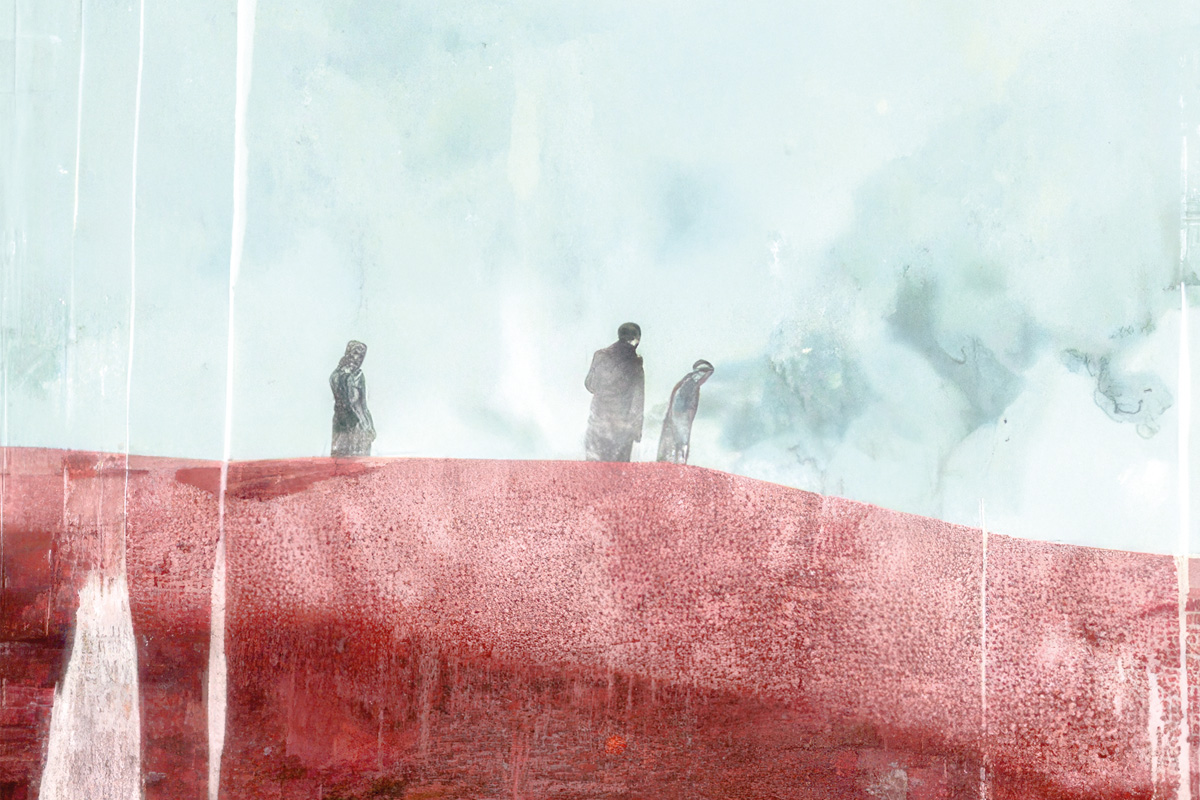
A ravine located just outside Kyiv, previously “known only to locals”, became the site of one of the worst single massacres in the history of the Holocaust in just two days.
In 1941, between 29-30 September, 33,771 Jews were murdered at Babi Yar. In the next three years of Nazi occupation, that number would rise to an estimated 150,000 people, including Jews, Soviet prisoners of war, communists, and Romanies.
Despite the fact that many of these details were deliberately concealed by the Nazi occupiers, and later the bureaucracy of the Soviet Union, Anatoly Kuznetsov’s Babi Yar: A Document in the Form of a Novel (1970) reveals the crushing reality of life and death in Nazi-occupied Ukraine.
View this post on Instagram
This is no ordinary anti-war novel. A red thread runs through Babi Yar: the desire to tell the truth. The narrative follows a 12-year-old Anatoly who fights a bitter struggle for survival against famine, deportations, executions, and terror.
Amidst all the horror, the reader might begin to comfort themselves with the idea that it’s only fiction – a dramatisation.
Yet, as though to interrupt this instinct, Kuznetsov includes short chapters titled, ‘A Word from the Author’, which sit amongst the gruelling details. They serve to remind us that all of this is absolutely real.
“Just imagine that you had been born just one historical moment sooner, this might have been your life.”
The book draws from the author’s own journals, written as a young boy during the occupation. Elsewhere, testimonies from the few survivors of this time form the backbone of the narrative.
This is where the documentary-novel is most difficult. There are brutal passages about a young woman’s escape from the pit of Babi Yar during the executions, or a young man’s escape from the concentration camp that was built on top of these mass graves.
Other chapters collect newspaper clippings, parts of orders, and announcements plastered by the Nazis across the city. These range from the eerily mundane (which films are on at the cinema, which streets are to be renamed after Hitler) to the starkly terrifying (the number of citizens to be executed for an act of sabotage, the consequences of not betraying your neighbour who may be holding extra food rations).
The result is an incredibly vivid picture of the Nazi invasion.
Life in Stalinist Ukraine
However, it’s not only the occupation that Kuznetsov paints in Babi Yar. The story extends into the past and the future, exploring life in Ukraine under Stalinist rule.
Each member of Anatoly’s family reveals one aspect of life in the Soviet Union. His grandpa is an embittered small peasant ruined by forced collectivization; his grandmother is an illiterate peasant inseparable from her Orthodox icons; his mother is a teacher, a beneficiary of mass-education programmes aimed at providing higher education for women.
Whilst each member of the family serves as a symbol, they’re by no means flat characters. The young Anataloy’s interaction with them shows their contradictory many-sidedness.
At first, Grandpa welcomes the Nazis as liberators; the book depicts how many in Ukraine did, initially. It soon became clear that the Nazis were not bringing freedom and cheap commodities, but rather mobile death-squads and gas chambers.
Grandpa instead cheers on the Partisans. Here, the glimmer of optimism felt by Anatoly as the Partisans began to rout the Nazi menace reminds the reader of the heroic actions of the Soviet masses – in spite of Stalin and the bureaucracy.
Still, the book does not shy away from depicting the crimes of Stalinism. These criticisms came at a great sacrifice for the author, who was eventually forced to flee the Soviet Union with pictures of the book’s uncensored manuscript smuggled in his coat.
In fact, the author explicitly rejects Socialist Realism, which he explains “requires an author to describe, not so much what really happened, as what ought to have happened”.
Shostakovich’s ‘Anti-formalist Rayok’: A scathing satire of Stalin’s cultural crimes
This struggle with the censors gave birth to a remarkable choice of form: all the instances of Soviet censorship are presented in bold type. This alone gives an incredible insight into the mind of the censors, and by extension, the bureaucracy.
Whether it’s one of Grandpa’s speeches criticising the excesses and corruption of Soviet officials, or whole chapters which give life to the surreal absurdity of the purges and their effect on ordinary people, the bold type helps them leap off the page.
Overall, these inventive formal choices serve the book’s main purpose: a ruthless exposition of the truth against all falsification.
Fundamental to the novel, too, is an anti-authoritarian sentiment which attacks any political system which treats human life as expendable. From Babi Yar itself, an “international grave”, to the wars and genocides we experience today, Kuznetsov’s novel is an exercise in speaking the truth, no matter how bitter it may be.
‘Babi Yar’ is available from Wellred Books Britain, and other booksellers.
View this post on Instagram