
At the moment, AI is acting as a prism through which all the worst parts of capitalism are concentrated. In the world of art, it is revealing a sharp cultural decline and intensifying feelings of alienation amongst workers and youth.
There is a great deal of anger and moral indignation around the question of AI-generated art, which is understandable given its terrible quality, and the threat it poses to the livelihood of artists.
It disgusts people that this ‘AI slop’ increasingly seems to be replacing human expression and artistry.
Does AI have potential?
Despite this, it is wrong to say that AI, or any technology for that matter, can never have a place in the world of art.
When the use of any new technology becomes a moral question, it means that the technology in and of itself is being conflated with the real root of the problem – a widespread, putrid social decay caused by the chronic decline of capitalism.
To give an example, the Canadian filmmaker Neill Blomkamp recently used AI to generate a 13-minute zombie film called Nightborne. As one can expect, it was uncanny, riddled with continuity errors, and the story was bland and derivative. His fans were appalled and it was bombed by critics.
The AI model he used, Seedance 2.0, is currently only capable of generating a few seconds of video footage at a time.
But it is not the technology in and of itself that is responsible for this ‘slop’. AI is a tool, and like any technology, if it is approached with intention, discretion, and creativity it could be used for the creation of good art.
It is the artist investigating their emotions and inner state, their relationship with their environment, with society, and exploring the relationships between their ideas and the world that makes great art.
This, of course, can be expressed in many different ways, literal or abstract. It can also be created with many different tools. There is no inherent reason why AI cannot be one of these tools.
New technology
Many of those who criticise AI art do so from a moral and philosophically idealist standpoint, claiming that the artificial nature of the machine renders it completely incompatible with human artistry. ‘It is inherently inhuman, therefore it has no place in the creation of art.’
This is not the first time in history that we have heard these kinds of narrow criticisms. In fact, the same ideas have been seen whenever new technologies have broken into the world of art.
View this post on Instagram
In 1857, the art critic Gustave Planche argued that the absolute precision of the photograph was actually a major flaw, asserting that a camera merely produced a “servile copy” of reality without synthesizing human feeling, artistic choices, or emotion.
When the film camera was first invented, critics from the theatre world accused it of being a cold replication of a play, and that it could not capture the emotional exchange between an actor and audience.
In 1898, one drama critic wrote in The Saturday Review that a camera lens could only capture the exterior “shadow” of an actor, and failed to communicate the “human aura”.
Of course, today we wouldn’t dream of denouncing photography or cinema in this way. They have more than proven themselves as artistic mediums in their own right.
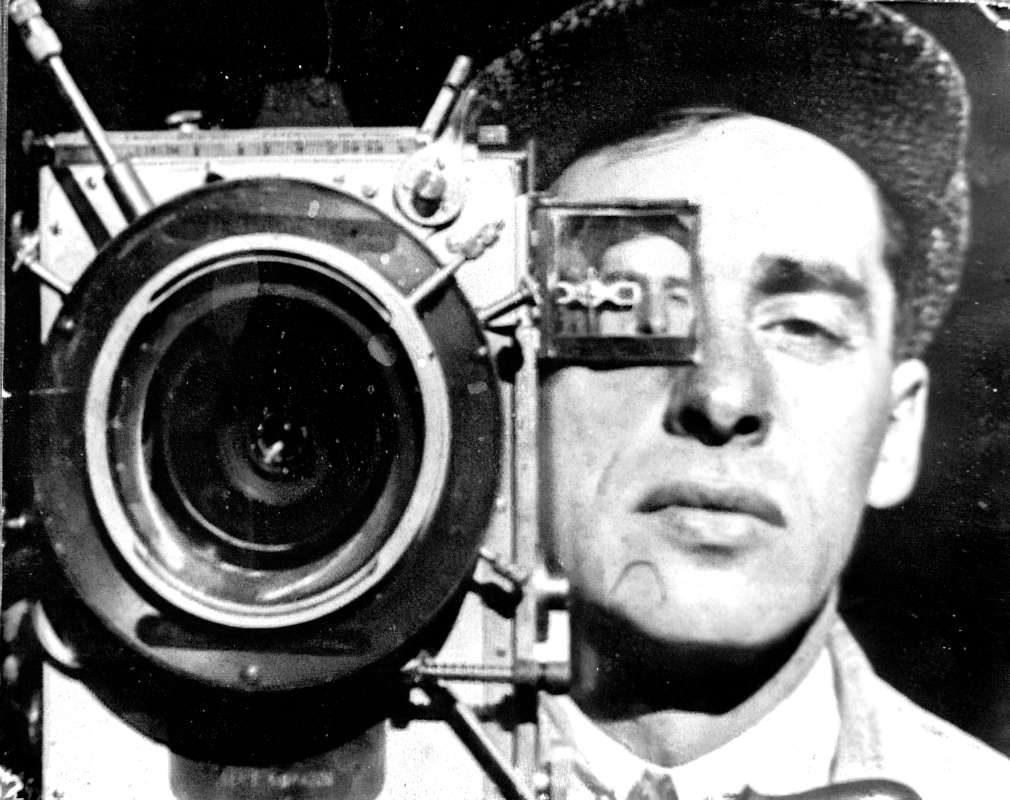
These critics were completely wrong about the camera, unable to see its potential. The Soviet filmmaker Dziga Vertov described it wonderfully:
“I’m an eye. A mechanical eye. I, the machine, show you a world the way only I can see it. I free myself for today and forever from human immobility. I’m in constant movement. I approach and pull away from objects. I creep under them. I move alongside a running horse’s mouth… My way leads towards the creation of a fresh perception of the world. Thus I explain in a new way the world unknown to you.”
The Russian Revolution ushered in a flowering of creative expression in all the arts. In particular, cinema was advanced to new heights by the likes of Dziga Vertov and Sergei Eisenstein, who regarded film as a weapon of class struggle. #Marxism #art https://t.co/q6UUoq7hFc
— Revolutionary Communists of America (@communistsus) August 24, 2022
A film is not trying to replicate a play, nor is a photograph trying to replicate a painting. We must understand that with new technology comes new and novel artistic potential, which can only be uncovered with extensive experimentation.
Photographers and filmmakers during the early 20th century were able to develop the camera into a new tool of emotional expression, to great effect.
AI under capitalism
The fact that AI is currently producing such repulsive, derivative art is not accidental. It has been developed in an epoch of widespread economic and cultural stagnation, and by profit-driven tech giants like Meta and X, which thrive on disgusting content designed to divide and enrage people
Experimenting honestly with AI, with the intention of developing a new tool to aid human communication and artistic experimentation, is completely incompatible with the rotting system in which we live today.
Under capitalism, technology is used only in service of profiteers, and honest artistry is deliberately beaten out of creative people. Only under socialism will we be able to truly free art, and fulfil the potential for expression hidden within these new technologies.