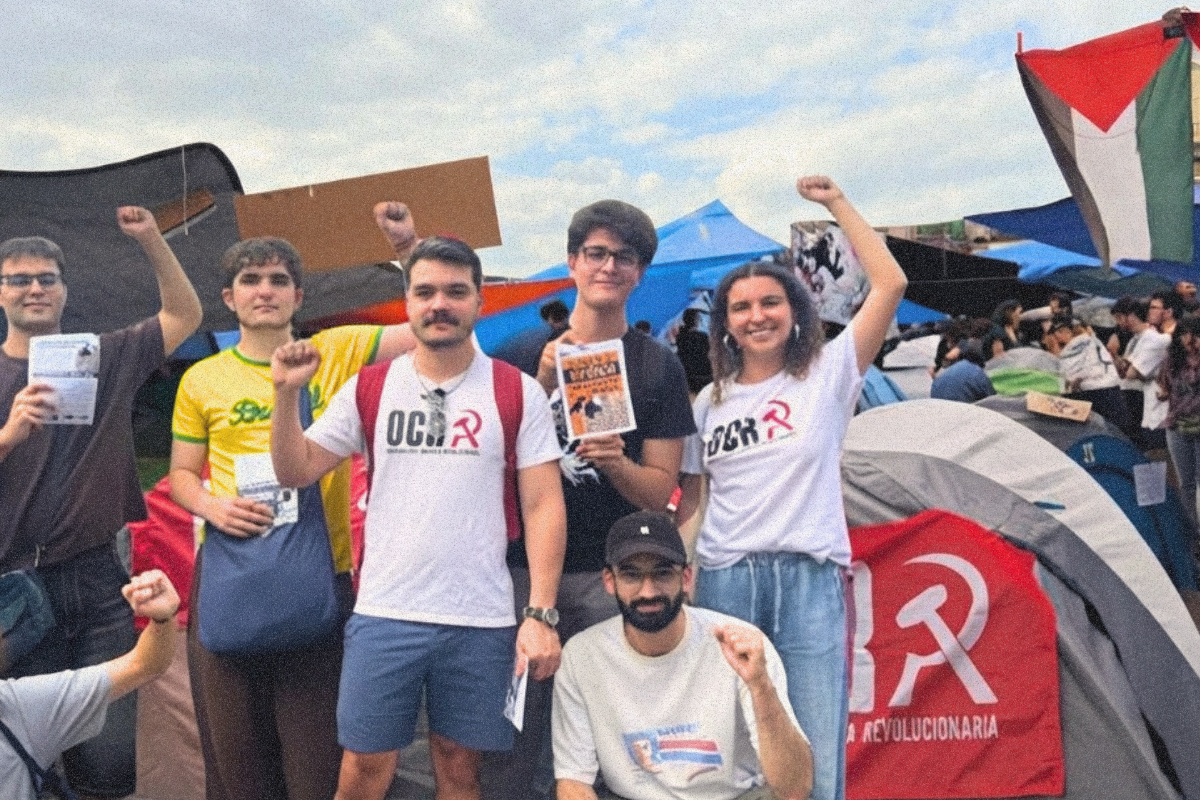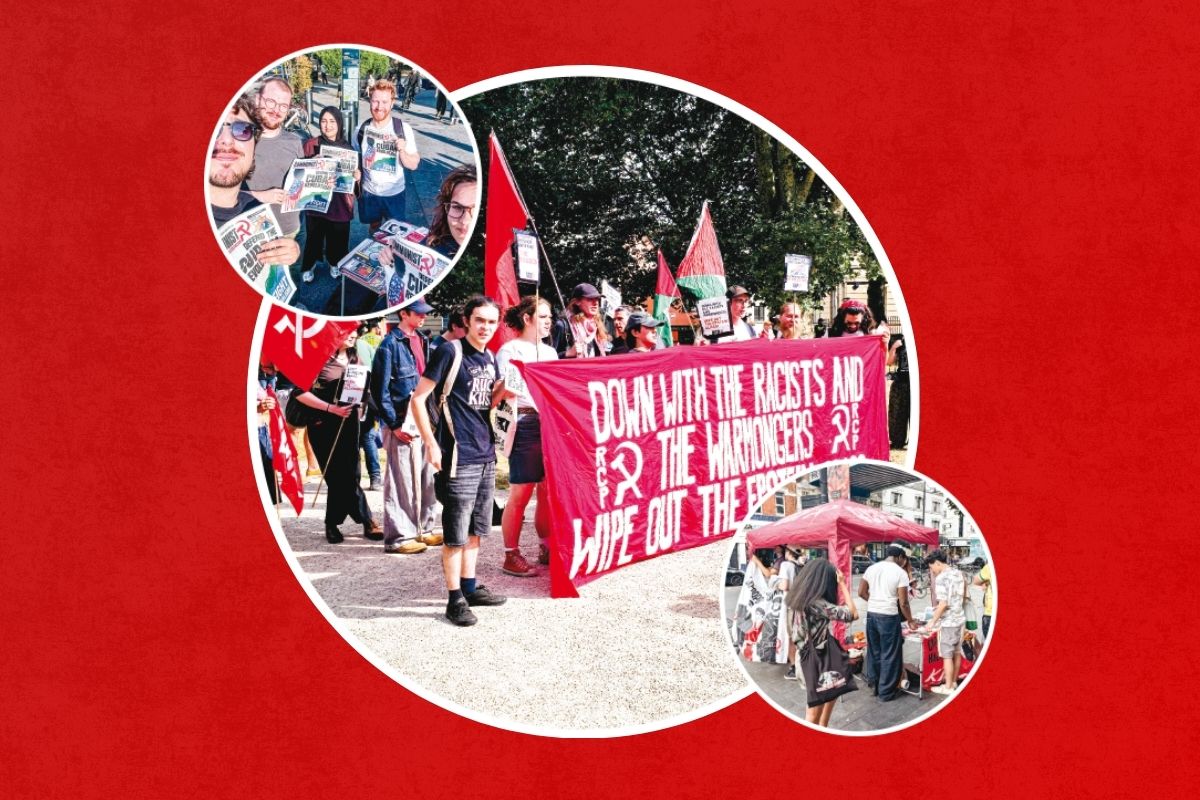
As thousands of students received their A-level and GCSE results last month – preparing to attend universities and colleges around the country – the Revolutionary Communist Party (RCP) has also been preparing to make a splash on campus this autumn.
Having established ourselves as the foremost political organisation among students, organised on some 48 campuses around the country, we are getting ready to utilise our forces to put communist ideas on the map like never before.
Connecting with students in Cambridge
Cambridge RCP’s leadership is gearing towards an offensive on three fronts at Hill’s Road Sixth Form, Anglia Ruskin University (ARU) and the University of Cambridge (UoC). Key to their work will be the question of fighting racism and Reform.
There is huge anger in the city in the wake of Professor Jason Arday’s death, and separately the revelation about Associate Professor James Orr grooming students to become future Reform politicians (see below).
View this post on Instagram
Cambridge RCP are therefore thinking bigger than ever before about how to connect with students, and to illustrate how we have the ideas to explain where the rise in racism and right-populist outfits like Reform come from. We intend to expose the complicity of the university management and the silence of the student unions; and to build for a demonstration against James Orr.
If we’re going to win over the growing layer of radical youth, our ideas need to be weapons in the hands of our comrades. The Cambridge comrades are therefore tackling this by bringing together the entire district to discuss the crisis of British capitalism, how to fight racism, and how to build the revolutionary party.
Sinking roots into Bristol
In Bristol we have some very ambitious plans, with comrades focused on fighting back against the pessimism we find on the left; sinking our roots at the University of Bristol; and building towards an all-day political school on the Russian Revolution.
Plans are underway for a raft of exciting open meetings, beginning with a discussion on the ‘Gen Z revolutions’ that have swept the world in the last few years, and the prospects for a similar upheaval in Britain.
With many ‘lefts’ characterising the period we live in as one of reaction, the comrades want to highlight the other side of this political process: the burning anti-capitalist radicalisation amongst the youth.
View this post on Instagram
At all of our events nationally, we will be raising the sights towards the role that young people have played – and will continue to play – in mass struggles which are shaking capitalist society to its core.
Beyond freshers, the Bristol comrades are planning to run a weekly ‘Red Day’, where we will publicly advertise a full day of communist activity on the campus.
From ‘Coffee with the Communists’ in the morning, to lecture shoutouts, and street stalls with The Communist, to big socials in the evenings: we will be marking out our space as the home for radical youth.
The form the Red Days will take will vary week to week: sometimes themed on certain questions, such as anti-imperialism, racism, or philosophy. It’s where students can come to get clarity and discuss revolutionary ideas that can change the world.
But this will also be a place to raise initiatives and discuss what we can do on our campus to organise such demonstrations, strike activity, and rallies.
Fight pessimism – we have a world to win
This is just a taster of what was discussed and mapped out in one week in two places. As we write, dozens more discussions are happening in branches all around the country, and battleplans are being drawn up.
Communist students in London, for example, will be organising their own radical bookfair. There are plans across the country for an anti-imperialist day of action culminating with the national march for Palestine on 10 October.
We are going into this next academic year with 200 communist students organised nationally, which makes us the largest student political group in the country. Imagine what we could achieve as a party if we could grow our student forces to 500!
The mood of quiet rage and desperation among young people is searching for a revolutionary expression. The RCP will return to the campuses this year with the belief that the world can – and must – be changed, carrying a mood of defiant optimism against all the odds.
Palantir infiltrates Cambridge University
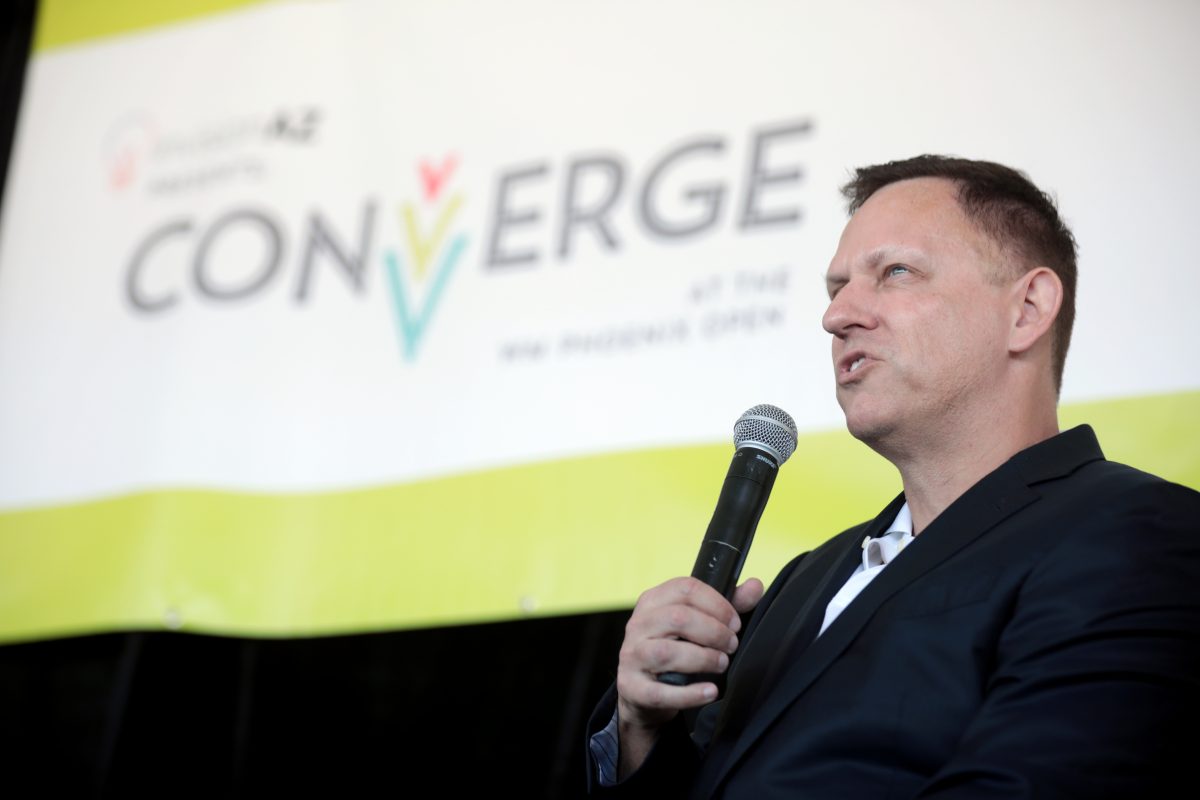
Last month, the Byline Times published an article on the role that US tech-giant Palantir plays at the University of Cambridge. Working with Reform’s Head of Policy James Orr, who is a professor of theology at Cambridge, Peter Thiel (the co-founder of Palantir) has created a pipeline for students at the University to be funnelled into right-wing politics.
When James Orr was first appointed to Cambridge in 2019, it was accompanied by a “five-figure donation” by Peter Thiel. Despite Orr doing little research or teaching whilst at the university, he remains in post as a professor at Cambridge.
As the Byline Times also went on to report, Orr has set up what he has called a “right-wing Mecca” at a house he and his wife own in Cambridge. Multiple right-wing politicians have visited Orr in Cambridge, including the vice-president of the US, JD Vance. More concerningly, however, Orr houses multiple postgraduate students for free, contravening safeguarding rules set out by the University.
So why does a professor who doesn’t teach or research, and often acts in blatant contravention of the University’s rules, remain in post? Because the bureaucrats who control the University have been bought off by Palantir.
They are completely detached from the workers and students who make the University of Cambridge what it is. Most people at Cambridge don’t want Palantir and far-right politicians to be involved in our University.
Yet, against our wishes, Cambridge’s reputation as an elite place of learning is used to launder the image of these racists, in exchange for large donations from people like Peter Thiel.
Cambridge University completely failed to protect and support Jason Arday. Meanwhile, they protect James Orr. This shows us management cannot be trusted: we need students’ and workers’ control of our university!
Cambridge Revolutionary Communist Students will be starting a campaign around this come freshers to say: Palantir and racist demagogues, off our campus!
Get involved in our campaign by contacting us at @cambscommunists on Instagram.
Joseph Heaney, Cambridge student
University in 2026 – what to expect?
Graduate jobs at lowest level since pandemic
This summer, workers and youth across the UK have been scorched by apocalyptic heat and record-breaking droughts. However, it’s not just the land that’s burning; under the blistering crisis of capitalism, the graduate job market has been reduced to ashes.
On Monday, Indeed revealed that graduate job openings are at their lowest level for this point in the year since the COVID pandemic. Meanwhile The Guardian reported that only 8,383 jobs have been made available for people leaving university. That is down 45 percent (!) compared with the same point last year, and the lowest since Adzuna, a recruiting website, began tracking this in 2016.
For example, in 2017, there were more than 55,000 graduate positions. Even those looking for seasonal work are struggling, with these job listings at their lowest level in four years.
Economic uncertainty has seen businesses cut back on entry-level recruitment. AI is also another factor which is destroying entry level graduate positions.
The Bank of England has admitted that employment may have seen no growth since 2025. All this, while 262,820 people are preparing to go to university in September, a record high. This underlines the tough conditions facing graduates.
Meanwhile, the number of young people not in employment, education, or training (NEETs) has risen to over 1 million, reaching a 10-year high.

This figure is only set to grow.
Young people have been sold a simple promise: work hard, go to university, get your qualifications, and a decent job will be waiting at the end. But what happens when we do everything we are told, and there are no jobs waiting for us?
This has left young people demoralised. A report from the Institute for Public Policy Research (IPPR) said that this summer 16-21-year-olds reported feeling less confident about being successful than a decade ago and some “are losing faith in their futures”.
This isn’t a trivial thing. This feeling of being deprived of a future has been a recipe for many of the ‘Gen Z revolutions’ we have seen all across the world in 2025.
This is not a failure of young people. It is a failure of the system.
Jordan Watkins-Jones, Cardiff
Sharks circle to privatise higher education
British universities have been consistently squeezed of funding for almost two decades. The sharks of private equity are circling. And they’re bringing out every scummy business tactic you can think of.
Europe’s biggest for-profit university group, Galileo Global Education (GGE), is eyeing up “financially distressed British universities as takeover targets”. UK-based Global University Systems (GUS) are “expanding rapidly”. And the Global Banking School (GBS) is now the UK’s largest university.
Already, one in ten university students are being taught by for-profit franchises, rather than the ‘prestigious’ institutions they hoped to sign up for.
These companies are the ‘loan sharks’ of the higher education world – eager for quick profits at students’ expense. Already, they’re stripping back quality and oversubscribing courses. Private franchise institution Oxford Business College for example was found last year to have defrauded the government of over £4 million in student loans.
Many young people across the world see UK universities as the key to escaping a life of poverty. The sharks capitalise on that. They see international students as cash cows, and use predatory online ads to prey on poor immigrant workers, desperate for a better life.
Not only this, like a true multi-level marketing scheme, they’re offering Amazon vouchers for new student referrals.

The Office for Students (OfS), a higher-education regulator, found that students at GBS repeatedly were given materials that were “not adequate”, watching YouTube videos and AI slop in classes – all for 10k a year.
One member of staff on Reddit described working for GBS as “an absolute joke”, focusing on numbers and profit over anything else: “it heavily relies on the need to make money, and not to give a reliable education for students”.
Another, initially excited by the high salary offered, later explained they are focused only on meeting corporate performance indicators, with no care for whether or not students can complete the course. Staff have to “spend days calling students trying to convince them to come in to get your KPIs up”.
The vice-chancellor of GGE-owned Regent’s University London explained they have a “discipline” enforced on their “priorities and costs”. As to what this discipline means, only the future will tell.
The murky, Nazi-supporting past of GGE’s largest shareholder, the ultra-wealthy French nobility Bettencourt family, gives us a glimpse of what these shadowy sharks stand for.
With 40 percent of universities in deficit, and no sign of funding coming from the government, it’s either sharks or tuition fee hikes – or more likely, both. This dark future for higher education only paves the way to make both students and staff even more miserable.
But we have the power to change this. If students and staff link up with a bold programme to put the decisions over HE in the hands of the people who actually run it and need it, rather than billionaire investors and six-figure execs, we can win an education system for the many, not the few!
Ben Campbell, Bristol
Parents and grandparents sacrifice to pay for university
University is a huge financial burden, not just on students, but upon entire families. The average cost of a university education now stands at over a staggering £70,000, which is expected to be paid for largely through debt, but also by parents and grandparents.
More than 25 percent of parents and grandparents contribute towards university and expect to spend over £50,000.
These contributions don’t come cheap or without sacrifice – around 25 percent expect to delay retirement or reduce their standard of living to keep up with costs; ten percent expect to take out loans of their own; and eight percent anticipate selling off assets.
After all that sacrifice, you’d hope this would allow graduates some financial stability.
But unfortunately, it does not. Under the Plan 5 repayment system, the burden has become even greater. Repayments are 9 percent of earnings over £25,000, with interest on the loans tied to inflation, and a 40-year repayment term.
When compared with previous systems, Plan 5 stands out as a significant attack on young workers. Estimates state that an average earner will repay £56,240 over their lifetime under Plan 5, tens of thousands more than under previous repayment plans.
So even those who never see the benefits of their degree will therefore face decades of deductions from their wages.
Many parents are sacrificing their standard of living; some in the belief that their children require a degree to secure a good wage, others just to give them a chance to fight for some of the few graduate jobs left.
But the sacrifices of parents and grandparents also creates a chasm between the generations in how they relate to each other. Students feel burdened not just by debt, but the weight of expectation from their elders who are making those sacrifices to help pay for their education – with the increasingly slim odds that this will ever actually pay off.
This is producing a profound sense of disillusionment in the system among young people, which offers them a bleak future for a hefty price tag.
Sophie Colclough, Newcastle University