The Revolution Betrayed: a Marxist masterpiece
Continuing our commemoration marking the 75th anniversary of the death of Leon Trotsky, we publish here an introduction by Alan Woods to Trotsky’s masterpiece: the Revolution Betrayed.

Continuing our commemoration marking the 75th anniversary of the death of Leon Trotsky, we publish here an introduction by Alan Woods to Trotsky’s masterpiece: the Revolution Betrayed.
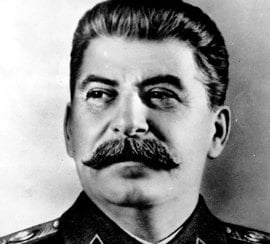
The events of the Russian Revolution1917 are the greatest in all of human history. For the first time in history, the exploited masses fought back and won. And yet within 10 years, the Soviet Union had degenerated into a bureaucratic and totalitarian regime, with Stalin at its head. How did this process occur? And what is Stalinism?
The decision of Lawrence & Wishart to demand that the Marxist Internet Archive (marxists.org) take down the collected works of Marx and Engels from their website has sparked justified outrage across the internet. Such works should not be a source of profit for publishers, but a freely available source of revolutionary education for workers and youth.
In this recording from the Marxist Summer School 2013, Jorge Martin, writer for www.marxist.com and International Secretary for Hands Off Venezuela, discusses the contributions made by Ted Grant – founder of the Militant Tendency – towards the Marxist theory of the state and the analysis of the Stalinist regimes in Russia and Eastern Europe after the Second World War, primarily based on Ted Grant’s excellent document “Against the Theory of State Capitalism”.
In 1949, Ted Grant, founder of the Militant Tendency and Socialist Appeal, wrote a polemical response to Tony Cliff on the class nature of the Soviet Union, arguing against Cliff’s theory of “State Capitalism”. Ted’s response provides an in-depth Marxist analysis on a range of questions, from the transition from capitalism to socialism, to the key issues of the state and the nature of Stalinism.
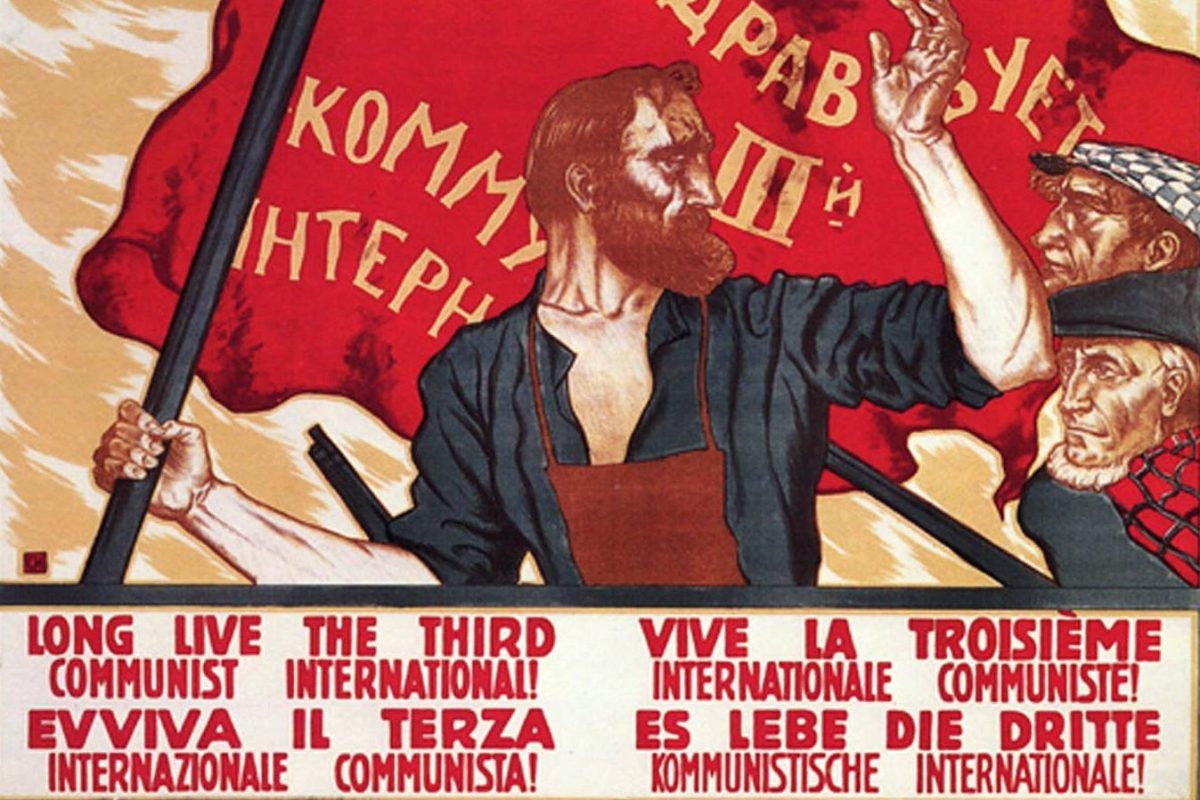
To celebrate this year’s centenary of Ted Grant, founder of the Militant Tendency and Socialist Appeal, we are re-publishing a series of Ted’s key writings. We begin with Ted’s pamphlet “The Rise and Fall of the Communist International”, which analyses the founding of the Third International and its decline under Stalin.
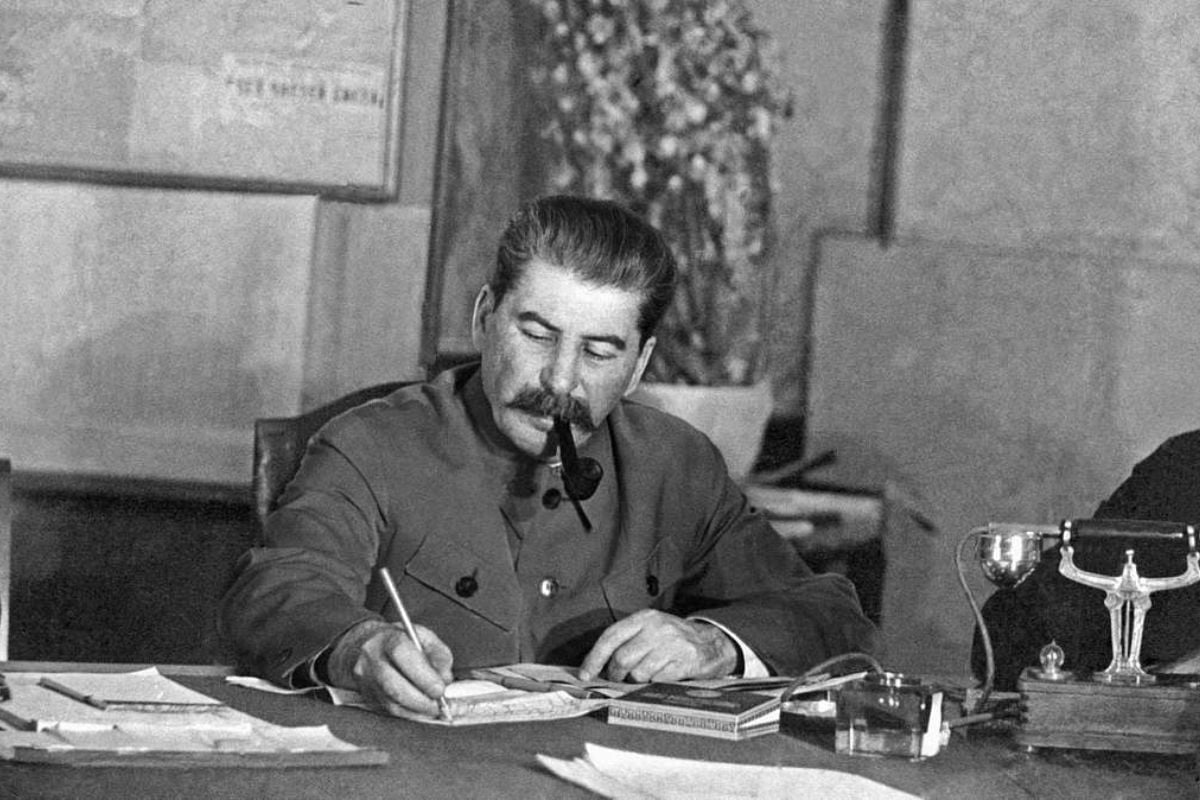
The Moscow Trials, which lasted from 1936 to 1938 will go down as the greatest frame-up in history. Their aim was to liquidate the entire
remaining Bolshevik old guard and act as the means by which Stalin
could consolidate his power as head of the bureaucratic caste that ruled the Soviet Union. Seventy-five years on, Jim Brookshaw – a former member of the British Communist Party – looks back at what happened and asks: why?
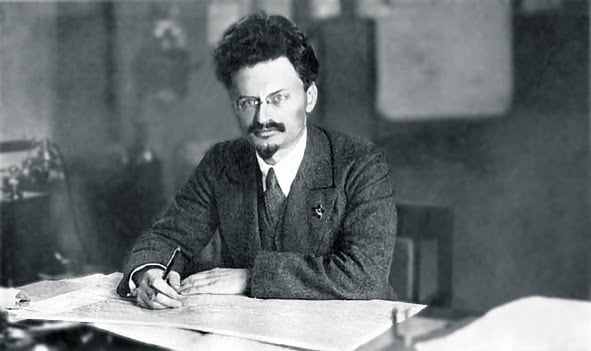
The history of the Russian Revolution is intimately associated with the names of Lenin and Trotsky, its two great leaders. They attracted all the praise and they bore all the hatred. The reason for this is not difficult to understand. The October Russian Revolution, led by the Bolshevik Party, was the greatest event in history. For the first time, the workers and peasant took power into their hands, swept aside the landlords and capitalists, and proceeded to organise a democratic workers’ Soviet Republic.
The authority of the new Soviet government rested upon a congress of soviets (workers’ committees) elected from factories and barracks.
Today we mark the 20th anniversary of the fall of the Berlin Wall by publishing an article from the current edition of Socialist Appeal which analyses why the events of 1989 have not had the outcome which the West expected. You can also download an audio file on the subject by clicking here .
Seventy years ago this month, the world was shocked by the
Stalin-Hitler pact. Ben Peck looks back at what happened and explains
why such an incredible event could take place – and the price that was
paid.
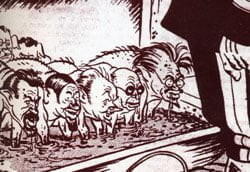
On October 1, Boris Yefimov, Stalin’s loyal cartoonist, died. In his
works he followed all the twists and turns of the Stalinist regime. He
was particularly vicious in his portrayal of oppositionists and the
Trotskyists in particular.
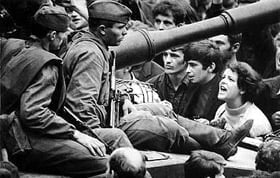
The intervention of Russian tanks temporarily
halted the movement in Czechoslovakia. But, as Alan Woods pointed out at the
time, "The rule of the bureaucracy now represents an absolute fetter on the
development of the planned economies of Russia and Eastern Europe. The needs of
the people can no longer be met by a system whose every pore is choked by
bureaucracy, mismanagement and waste."